Ruth and the Green Book
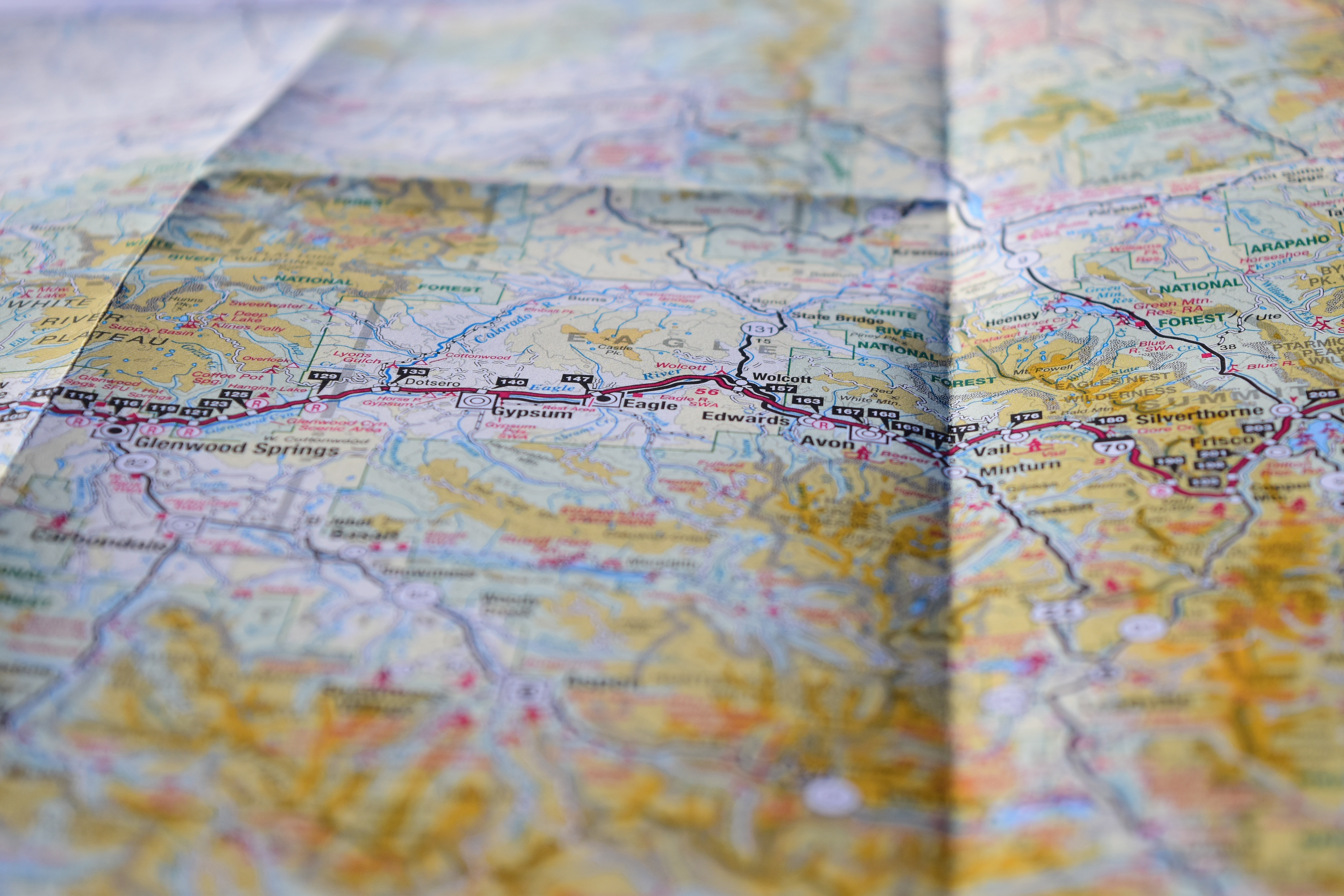
This lesson introduces students to the difficulties faced by African Americans during the middle twentieth century. Using the book Ruth and the Green Book by Calvin Alexander Ramsey, students learn about “safe spaces” available to African Americans as they traveled in the United States. Student learning is enhanced by translating textual clues in the story onto a road map of the United States. This lesson is designed as a geography, history, and reading combination for grade 5 and is adaptable for middle level instruction. The student will construct a map from textual clues and assess whether the best travel route was selected.
Lesson Created By: SharlaBrown, Jerry T. Mitchell, Larianne Collins
Lesson Partners: South Carolina Geographic Alliance
Essential Question
Determine the impact of discriminatory laws on the United States socially, politically and economically.
Grade(s):
- 3
- 5
Subject(s):
Recommended Technology:
Internet
Smartboard
Other Instructional Materials or Notes:
Transparency sheets
Dry erase markers
Tape
You can check out Ruth and the Green Book from your school or local county library.
If you are not able to access the book from your school or county library you can access the book via the betterlesson.com website. You will need to create an account in order to download the book.
Where to find free travel brochure templates
- Instruct students to go to https://www.canva.com/create/brochures/
- Students can create an account with their Google account.
- Students can also access free accounts at Lucidpress
- Students can use free online templates from Microsoft Office
- Travel brochure from Microsoft Office Microsoft Word (sample uploaded)
- Travel brochure from Microsoft Office PowerPoint (sample uploaded)
Lesson Progression
1. The teacher will discuss how people of different races have been mistreated by others. At various times in U.S. history, African Americans were denied opportunities available to whites. These exclusions extended to education and access to services such as restaurants and hotels. The teacher may also discuss how the lack of opportunities in the American South contributed to the Great Migration, the movement of thousands of African Americans from the South to northern cities. The book used in this lesson mentions that the father of this Chicago-based family grew up in Alabama; he himself may have been part of the Great Migration
2. The teacher reads aloud the picture book Ruth and the Green Book or students may read it individually.
- If reading aloud or after students read book the teacher should take time to show the illustrations to the students and allow them to comment on what they see. For example, the students may be asked about the characters’ facial expressions. When are they happy? Do they ever appear sad? Scared?
3. During the reading, the teacher should pause and ask the students about the story setting. Students will revisit the answers to these questions when they begin their activity (student worksheet #1)
4. Once the story has been read, have the students complete the book review questions (Student Worksheet - Part I). This information will be useful for the activity during the second class period. Possible answers are given in Student Worksheet. The teacher may choose to review each answer with the class as a whole. This would conclude instruction for the first class period
5. During the beginning of the second class period, review the answers from Student Worksheet - Part I as a lesson refresher.
6. The teacher explains that the students will map the journey taken in the book. Using the online links, The Green Book Google map or the Green Book Travel map of the United States, the students use the clues described earlier to draw the route. Remind students that Interstate highways did not exist and that back roads and smaller U.S. or state highways would need to be used. Students will use the answers from Student Worksheet #1 to complete their map.
7. Using the map, the teacher (or student) locates the beginning of the journey—Chicago. Students should place a transparency sheet over the map to draw their route. This will save the map for future use. The transparency sheet may need masking tape to hold it in place.
- Consider having the students draw each day in a different color with the dry erase markers. From the story students can identify five travel days:
- Day One: Chicago to? The trip begins in the morning as they stop for lunch. They stop for gas and stop later at a hotel. The first night is spent driving and sleeping in the car. They are in southern Illinois, southern Indiana, or part of Kentucky.
- Day Two: Kentucky to Tennessee. They stop for roadside picnics and cross into Tennessee to stay the night with Eddy.
- Day Three: Tennessee to Georgia. They stop at an Esso station and stay the night at a tourist home with Mrs. Melody. The tourist home may be in Georgia as they are near that state’s border. The Green Book lists a Melody Tourist Inn, but it is in Brunswick. This is far from their Alabama destination, so this is an unlikely stop (we do not know if “Melody” is her first or last name, either).
- Day Four: Georgia to Alabama. The car breaks down and they stay one night at the Palm Leaf Inn in Birmingham (an illustration on page 24; also Figure 3). Figure 4 is page 8 of the 1949 Green Book. Students can see that the Palm Leaf Inn is located in Birmingham.
- Day Five: Birmingham, Alabama, to Grandma’s house. Based on the text description, Grandma’s house should be within a few hours of Birmingham at most. Students should realize that central Alabama is the likely location of Grandma’s house. Following the logic that Ruth’s father might be a part of the Great Migration, it is reasonable to assume that Grandma’s house might be in a rural area as many African Americans left those areas for northern cities.
8. Student Worksheet - Part 2 - Once the map is complete, ask the students if they think this is the best route (shortest). How would they travel today? Students may draw a more direct Interstate highway route to compare with the “book” route. How long would their trip take today? The teacher should make sure that the students realize that to find “safe spaces,” African American travelers needed to plan their routes differently than other travelers, often making their trips longer and more expensive. Students will have to determine how the distribution of “safe spaces” of the map would impact their route selection as an African American traveler.
9. With a Smart Board and Internet access, or with access to a computer lab, students will create a travel brochure to investigate the 1956 Green Book further. Utilizing a custom Google Map with that year’s listings is available through the Digital Collections at the University of South Carolina (2011). The teacher may pose a trip between two city points—for example, Charleston, South Carolina, and Raleigh, North Carolina.
- Students will choose a beginning and ending location using the routes outlined in The Green Book.
- Students will have to find three to five African American historic places to visit along this route.
- Students will need to explain the significance of the historic place in US history as it relates to discrimination.
- Students will need to discuss how these places may have contributed to the passage of laws against discrimination in the US.
Teacher Notes
You can see if Ruth and the Green Book is available to check out from your local library.
If you are not able to access the book from your school or county library you can access the book via the betterlesson.com website. You will need to create an account in order to download the book.
Student Worksheet
During the reading, the teacher should pause and ask the students about the story setting. Students will revisit the answers to these questions when they begin their activity. Questions to ask include:
View ResourceUS Map
View ResourceTravel brochure from Microsoft Office (Microsoft Word)
View ResourceTravel brochure from Microsoft Office (PowerPoint)
View ResourceRubric for African American Historic Travel Brochure
View ResourceResources Civil Rights/Discrimination in the US
The Albany Movement - University of Georgia professor Dr. Barbara McCaskill remarks on how activists involved in the Albany Movement in south Georgia boldly sought to desegregate all institutions at the same time.
View ResourceResources Civil Rights/Discrimination in the US
Alexander Clark and an African-American’s Fight for Civil Rights - After winning the first successful school desegregation case in the history of the United States in 1867, Iowa businessman Alexander Clark received his law degree, ran a newspaper in Chicago, and became the United States Ambassador to Liberia.
View ResourceResources Civil Rights/Discrimination in the US
Students can review photographs from the Library of Congress.
View ResourceGreen Book Google Map
Search and filter listings from the 1956 Negro Travelers’ Green Book using the following options. Up to 500 results will display in the table below. Clicking on a table row will open an info balloon at that point on the map.
View ResourceGreen Book Travel Map
Using data extracted from the books themselves, we welcome you to visualize a trip one may have taken using these books.
View ResourceMapping Resources from SCGA
Blank outline maps of World Regions, the United States, and South Carolina.
View ResourceGreen Book Search and Filter Listings
From the 1956 Negro Travelers’ Green Book using the following options.
Up to 500 results will display in the table below. Clicking on a table row will open an info balloon at that point on the map.
Free Online Travel Brochure Templates
View ResourceFree Online Travel Brochure Templates
View ResourceRuth and the Green Book
You can access the book by creating a free account with Better Lesson.
View ResourceGreen Book of South Carolina
Discover 300+ African American cultural sites across S.C. with this free mobile travel guide from the S.C. African American Heritage Commission. Browse locations near you or by category, right here.
View ResourceThe Negro Travelers Green Book
A travel guidebook for African American that provided a list of hotels, boarding houses, taverns, restaurants, service stations and other establishments throughout the country that served African Americans patrons.
View ResourceAcademic article from SC Geographic Alliance on Lesson Purpose
The two professors who created this lesson explain in detail that the purpose of this lesson is to increase student learning of history and English/language arts by using geography as a medium.
View ResourceStandards
- 3-5 The student will demonstrate an understanding of the major developments in South Carolina in the late nineteenth and the twentieth century.
- 5-3 The student will demonstrate an understanding of major domestic and foreign developments that contributed to the United States becoming a world power.
Assessments
Students will retrace the travel routes of African Americans traveling during the Jim Crow era using the Green Book.
Students will create a brochure for travelers to use today that will include historically significant places along the routes in the Green Book.