Reading Lesson on Apples
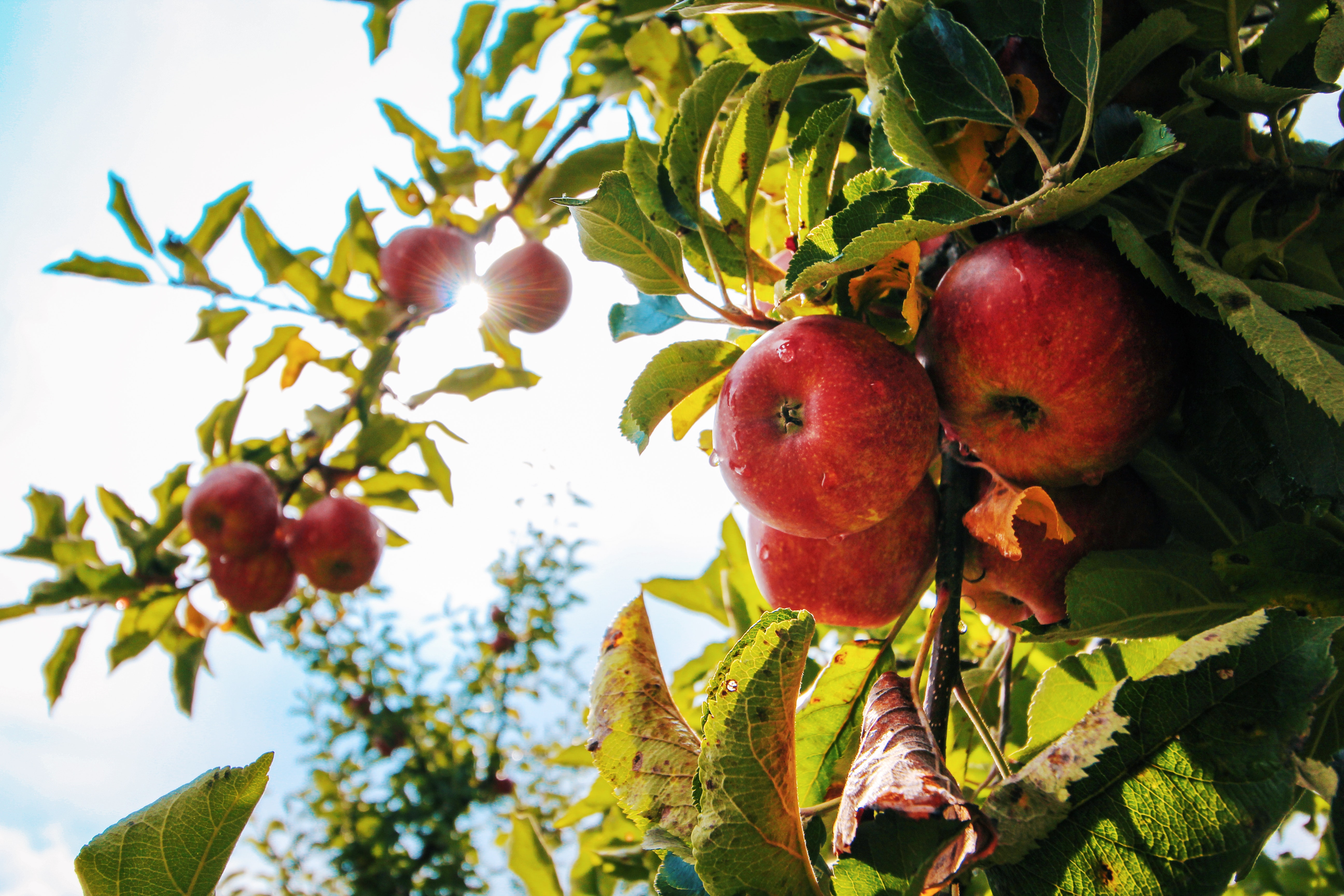
Students will be able to determine the meaning of a story. With the help of a teacher, they will be asked questions and will be able to answer them to make predictions using their prior knowledge and information from the text they read.
Duration
Less than 1 hour
Lesson Type
Traditional Lesson
Grade(s):
- Kindergarten
- 1
Subject(s):
Recommended Technology:
N/A
Other Instructional Materials or Notes:
- Book Applesauce by Katherine P. Burdick (copy for each student)
- Index cards with content words and definitions (add, apples, applesauce, cinnamon, cook, cut, green, mash, red, yellow)
- Index cards with high-frequency words (are, the, some)
- Crayons
- Whiteboard
- Marker
- Chart paper
Lesson Progression
- The teacher will ask students to come to sit on the rug in their spots and hand them each their own Applesauce book.
- The teacher will show students the front and back covers of the book Applesauce.
- T: Let’s read the title together. (Teacher and students will read title together.)
- T: What do you think the book is going to be about based on the title? (Allow students to share.)
- The teacher will show students the title page and discuss who the author and illustrator are.
- T: Let’s think about what we know about apples to help us understand the book. (Allow students to discuss what they know about apples.)
- T: Who would like to share something about apples? (Allow students to share.)
- The teacher will write students answers on chart paper.
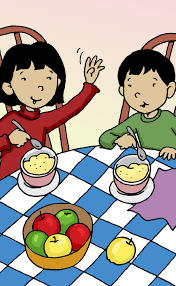
- T: We just took a few minutes to think about everything we know about apples. I am going to use what I know about apples to help me understand the book. The title of this book is Applesauce. The front cover shows a boy and a girl eating applesauce and the back cover shows a girl picking apples. I know that applesauce is made from apples. I know that apples are sweet, hard, and crunchy. (Teacher will point to the board to refer back to what students know about apples.) I also know that applesauce is sweet, but it is also smooth and not crunchy like an apple. Something must be done to an apple to turn it into applesauce. I think that this book will show readers how to turn apples into applesauce.
- T: When an author writes a story, he or she has a reason, or purpose, for writing. These reasons may be to entertain, to inform, or to persuade.
- The teacher will explain what each of these mean in more in detail and share examples for each.
- The teacher will lay out the vocabulary words: are, the, some, add, apples, applesauce, cinnamon, cook, cut, green, red, mash, and yellow. The teacher will go over the vocabulary words and their definitions written on the back of the index cards one by one. The teacher will ask the students to say each word out loud after she introduces it. Tell students that these are words they will encounter as we are reading the story aloud together.
- Afterards, the teacher will read through the story with the students. Remind students be to be thinking of what the authors purpose might be as they read.
- Once the story is finished, allow students to share what they think the author's purpose is. Challenge them to also share what clues from the story helped them to make that decision.
Standards
Assessments
The teacher will ask students: What do you know about apples? The teacher will monitor the students' connection to prior knowledge by observing their discussions and answers to the question.