PBL: Butterfly Wing Architects (Exploring Angle Relationships)
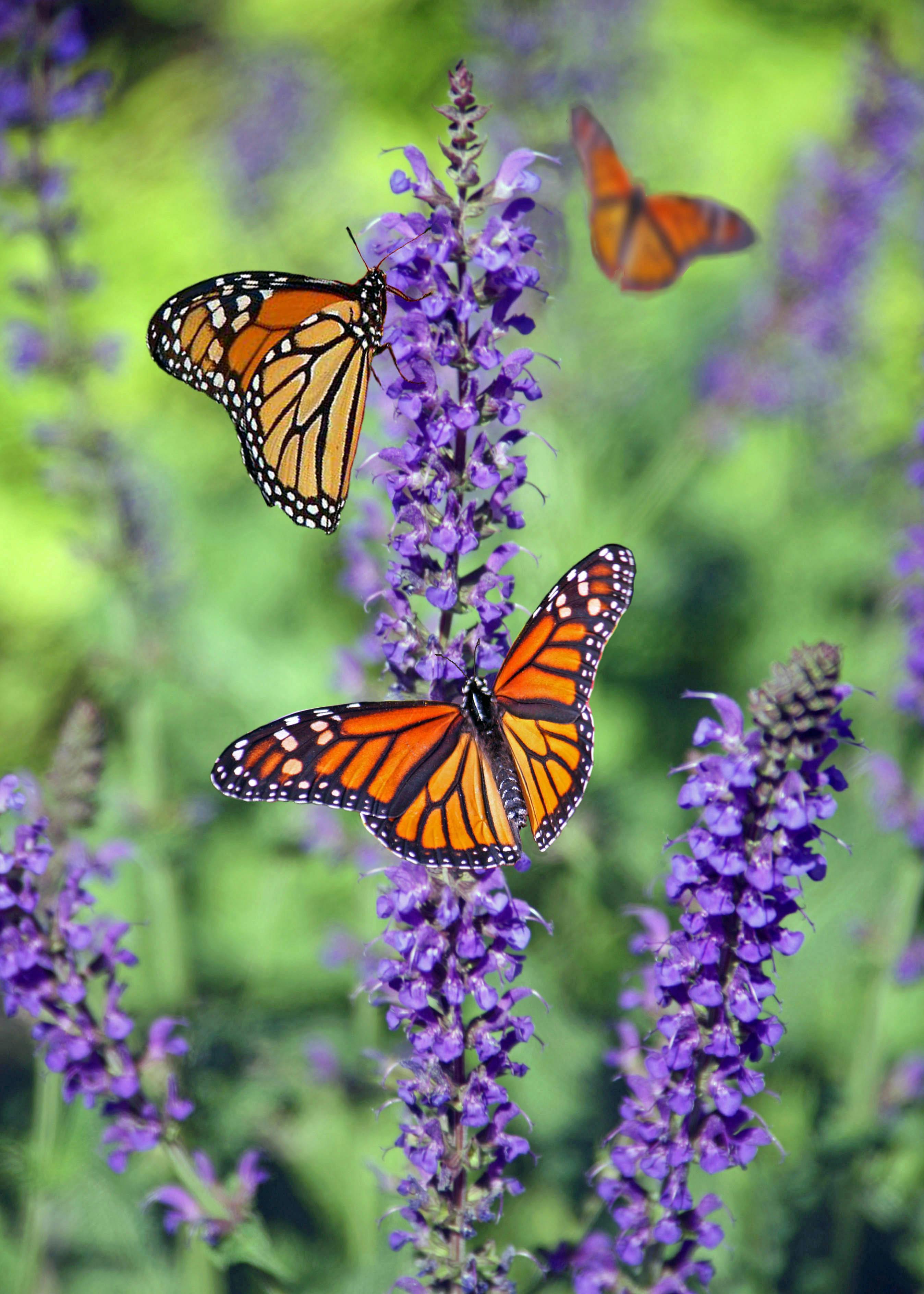
In this lesson, students will explore the concepts of complementary and supplementary angles by designing a butterfly wing. They will apply their knowledge of angle measurement and relationships to create a visually appealing design that demonstrates their understanding of these geometric concepts.
Essential Question
How can understanding angle relationships like complementary and supplementary angles help us analyze and create designs, such as the intricate patterns found in butterfly wings?
Grade(s):
- 6
Recommended Technology:
Other Instructional Materials or Notes:
- Create or find simple butterfly outlines (examples linked in the resources tab)
- Students will need to use colored pencils, markers, etc to create their designs
- Print a copy of the grading rubric/requirements for each student
- Class set of protractors to measure angles
Lesson Progression
Project Phases:
Phase 1: Research & Exploration
- Introduction:
- Begin with an introduction about the diversity and beauty of butterflies, focusing on the symmetry of their wings.
- Introduce the driving question (How can understanding angle relationships like complementary and supplementary angles help us analyze and create designs, such as the intricate patterns found in butterfly wings?) and explain that today, they will be taking on the role of butterfly wing architects.
- Facilitate a class discussion about symmetry, geometric shapes, and angles found in nature.
- Show visuals of various butterfly wing patterns and discuss their characteristics.
- Angle Relationship Research:
- Students research complementary and supplementary angles, exploring their definitions, properties, and real-world applications.
- Provide resources like online articles, videos, and textbooks.
- Students create visual aids (diagrams, posters) to explain these angle relationships.
- Encourage them to find examples of these angles in nature or architecture.
Phase 2: Design & Creation
- Design Brief:
- Provide students with a design brief outlining the project requirements:
- Create a unique butterfly wing design.
- Incorporate at least one pair of complementary and one pair of supplementary angles.
- Accurately measure and label all angles.
- Provide calculations and explanations for angle relationships.
- Present the design and explain the mathematical principles to the class.
- Provide students with a design brief outlining the project requirements:
- Design & Creation:
- Students work individually or in small groups to design and create their butterfly wings.
- They use protractors, rulers, and art supplies to create visually appealing designs.
- They document their process, including sketches, measurements, and calculations.
- Provide feedback and guidance during the design process.
Phase 3: Presentation & Education
- Presentation Preparation:
- Students prepare presentations to showcase their butterfly wing designs and explain the mathematical principles they incorporated.
- They can use posters, digital presentations, or other creative methods.
- Encourage them to use clear visuals and engaging language.
- Presentations:
- Students present their designs to the class, acting as "butterfly wing architects."
- They explain their design choices, angle measurements, and calculations.
- They educate their peers about complementary and supplementary angles.
- Facilitate a class discussion about the different designs and the mathematical concepts presented.
Additional & Optional Assessment Ideas:
- Research & Exploration Phase: Assess students' understanding of angle relationships through their visual aids and participation in discussions.
- Design & Creation Phase: Assess the quality of their butterfly wing designs, accuracy of measurements, and clarity of calculations using a rubric (linked in the resources section).
- Presentation & Education Phase: Assess their presentation skills, communication of mathematical concepts, and ability to engage their audience.
- Reflection Journal: Students maintain a reflection journal throughout the project, documenting their learning process, challenges, and insights.
Teacher Notes
differentiation: Provide simplified design templates and angle measurement guides. Offer one-on-one or small group instruction with additional modeling and support. Allow them to focus on creating one pair of angle relationships. Provide pre-labeled angles and ask them to identify the relationships.
extension: Challenge them to incorporate more complex angle relationships and geometric patterns. Have them research real-world butterfly wing patterns and incorporate them into their designs. Ask them to create a digital presentation or interactive display. Have them write a report on the mathematical properties of butterfly wing symmetry and its applications in design.
Grading Rubric
View ResourceFinding Unknown Angles
Optional supplementary video exploring relationships between angles.
View ResourcePrintable Butterfly Outlines
Example butterfly outlines to provide students with for the project.
View ResourceStandards
Assessments
Use the grading rubric attached in the resources tab, assess student learning outcomes.