Math Tubs
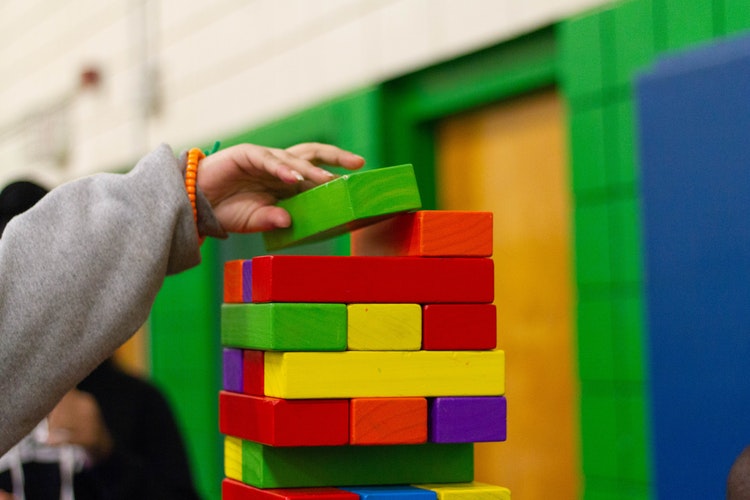
The students will be able to identify teen numbers and graph data using a picture. The students will be able to create shapes using snap cubes, and use pattern blocks to complete puzzles. The students will be able to add or subtract.
Essential Question
How can we represent gathered data? How can we create shapes using given attributes? How can we use pattern blocks to complete puzzles?
Grade(s):
- Kindergarten
Subject(s):
Recommended Technology:
ipads
Other Instructional Materials or Notes:
- 6 Math tubs
- Twister mat with teen numbers on it
- Extra spinners
- Paper
- Pencil
- Geoboards
- Block puzzles
- Spring pictures
- Snap cubes
- Interactive math table
- Sticks with student’s numbers on them
- Directions on how to complete each math tub
Lesson Progression
- Teacher will gather the math tub materials and separate them into six different tubs. After, the teacher will place the math tubs in different spots throughout the room while the students are settling down from lunch.
- Transition: T: Once you are seated quietly I will call you to the rug by the table. Please sit on your assigned letter. (Allow wait time)
- The teacher will call the quietest table to the rug first and so on until all of the students are seated.
- T: Today we will be doing math tubs to review what you have learned so far this year. I will assign three people to a math tub.
- The teacher will draw sticks with the student’s numbers on them to assign three students to each math tub. The teacher will point to the math tub that each group of students will be participating in. (Allow wait time for students to transition to their math tub)
- T: I will be walking around the room to explain the math tub and assist you if you need any help. You will have about fifteen minutes to complete your task. Directions on how to complete your task are placed inside each math tub. Please raise your hands if you have any questions.
- The teacher will walk from one math tub to another, observing and helping students as they complete their math tub. The teacher will redirect students if needed. (This will take approximately 15 minutes for students to complete)
- T: Finish up completing your math tub and sit quietly please. (Allow wait time for students to complete their work)
- T: Once you have completed your task, please raise your hands so that I can come check your work. Once I have checked your group, please clean up your materials and sit quietly.
- The teacher will walk from one math tub to another, checking students’ completed tasks.
- Conclusion: T: Today you completed a math tub that helped you review what you have learned so far this year in math. You all did a great job!
- Transition: T: Now that you have all gotten your work checked and cleaned up your materials, please gather anything you need for related arts and line up at the door.
Math Tub Run Down:
Geoboards /Spring Pattern block puzzles
They will complete puzzles using pattern blocks, then they will create pictures using geoboards.Spring Graph/tally marks
They will tally and graph data using a spring picture.Spring unifix cube puzzles
They will use snap cubes to create spring shapes. They will count and color the blocks they used.Interactive Table
They will do addition and or subtraction practice on the Interactive table.iPad Patterns
They will do reflex math for 10 minutes, then a pattern activity on the iPad.Twister
They will use an extra spinner that has teen numbers on it to tell them which number, rather than color, to touch on the twister mat.
Teacher Notes
Differentiation: Extend values into 20+.
Extension: Pull small groups for remediation as necessary. Assist students as they progress through stations.
Standards
- K.PAFR Patterns, Algebra, and Functional Reasoning
- K.PAFR.1 Develop an understanding of the relationship between addition and subtraction to solve problems
- K.PAFR.1.1 Add and subtract number combinations within 5
- K.PAFR.1.2 Create a sum of 10 using objects and drawings when given one of two addends 0–9, to include real-world situations
- K.PAFR.1.3 Compose and decompose numbers up to 10 in different ways. Record using objects or drawings
- K.PAFR.1.4 Solve add-to/joining, take-from/separating, part-part-whole (total unknown), part-part-whole (both addends unknown) real-world situations to find sums and differences within 10
- K.PAFR.1 Develop an understanding of the relationship between addition and subtraction to solve problems
Assessments
Students will complete the math tub task given to them. Students will be assessed based on the accuracy of their work and completion of the task. Teacher will monitor students, check their work, and scaffold them throughout the lesson to ensure that they have gained an understanding of the task.