Mask Portraits
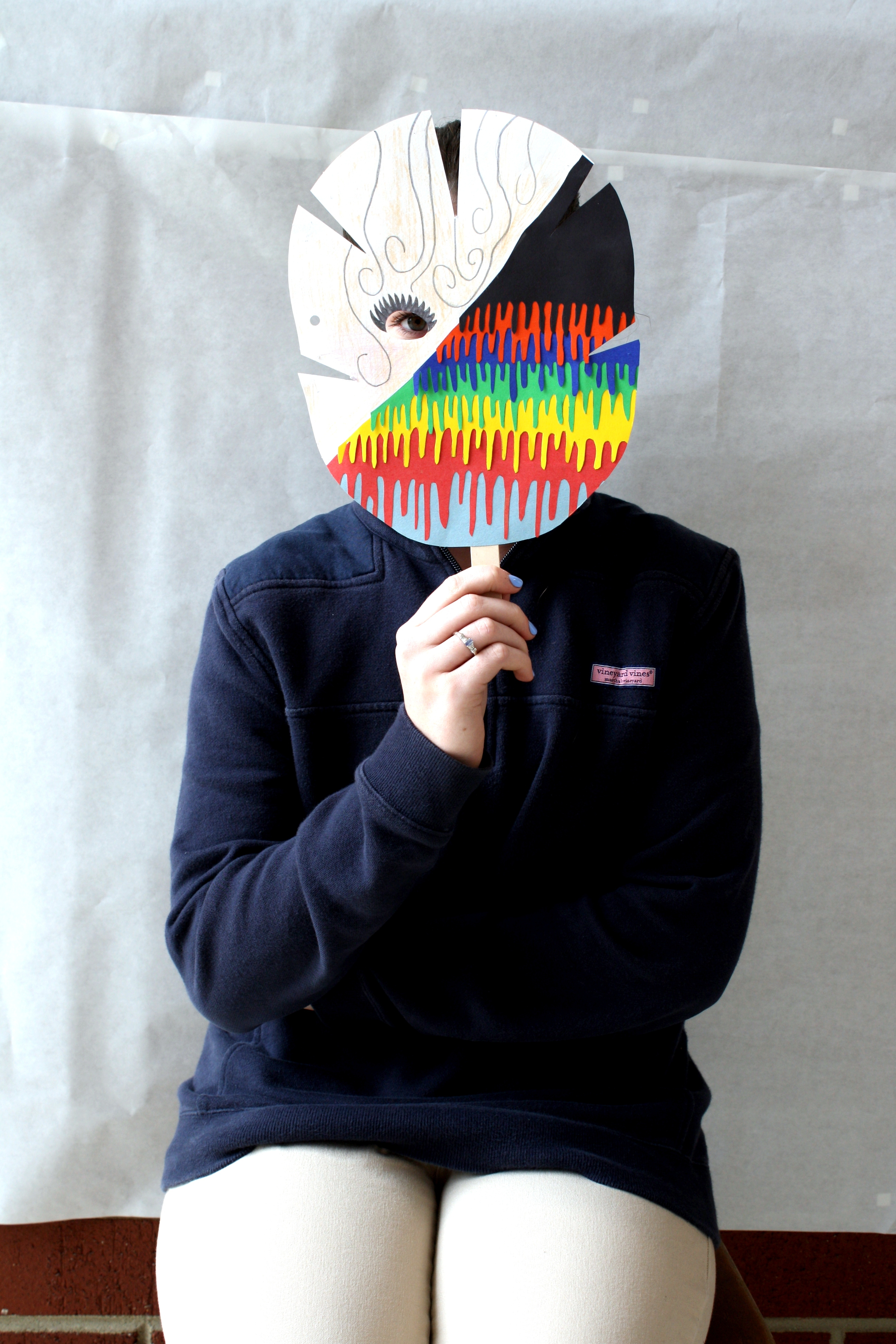
What We Did:
Everyone knows that middle schoolers have lots of emotions—most of which change multiple times within a single class period. During my ten years of teaching middle school, I have made an effort to discuss emotions and art in an open way by encouraging students to recognize emotions, feel emotions, and eventually learn how to express emotions through art.
Lesson Created By: CarlonSteller
Lesson Partners: ABC (Arts in Basic Curriculum)
Essential Question
Can I create a mask that evokes a mood or emotion?
Grade(s):
- 7
Subject(s):
Recommended Technology:
*A way to display a PowerPoint or Google Slides.
*A camera to take the Mask Portraits.
Other Instructional Materials or Notes:
Vocabulary:
- Mask
- Evoke
- Composition
- Portrait
- Monologue
Instructional Objectives:
- Students can create a mask made of drawing materials and/or found materials.
- Students can create a mask that evokes a mood or emotion.
- Students can create a character for their mask that they then can pose as for a Mask Portrait.
Materials: Based on a class of 25 students
- Mask Template (https://roylco.com/shop/r52076-folding-fun-masks/)
- Paper
- Drawing Materials
- Random/Found Objects
- String
- Hole Punch
- Camera
Lesson Progression
Procedure:
- Discuss artists that are strong examples of using color, shape, and line to evoke a mood—Mark Rothko, Lee Krasner, Wassily Kandinky, Pablo Picasso.
- Have students make a list of 1-10 of emotions and then list the colors, shapes, and lines they associate with that emotion.
- Create non-representational sketches using color, shape, and line to practice evoking mood.
- Study the History of Masks.
- Combine the previous sketches with mask making.
- Create a mask using drawing and/or found materials.
- Develop a character for your mask and pose for a Mask Portrait.
- Take is a step further and write a monologue in the perspective of your character.
- Display!
Teacher Notes
Two years ago I was fortunate enough to have Prentiss Standridge, a guest theater-integration teacher, come to all my classes through a phenomenal collaborative program with the Metropolitan Arts Council called SmartARTS (www.greenvillearts.com/smartarts). She and I focused on masks with the assignment being that each student creates a character that evokes a mood or feeling. Students would create masks, be photographed creating silhouettes with their bodies while wearing the masks, and then write monologues to reveal their characters.
I explain to my students that creating, for example, an angry mask does not mean that person represents that particular emotion, but there may be some truth and experience involved in understanding anger. With peace of mind, students can create remarkable characters with the simple start of sketching out the colors, shapes, and lines that they would associate with particular emotions and then apply these compositions to mask forms. Would the mask be full, half, custom or inspired by a mask from a specific culture or time in history? From there, I ask students what materials, how will the placement on the face, and where is the emotion coming from. Students were incredibly thoughtful about their choices. After an exercise of “becoming one” with their masks, each stepped out into the hall and posed for me. I would count down, say the appropriate emotion, and each student would pose revealing a character.
How It Went:
The mask portraits are works of art that showed transformation in my students. I would see a student of mine who could not keep still portray a character as calm as water. A student who is small and shy developed a large character who was a wannabe stand-up comedian trying to find the perfect joke as he lay on the ground laughing himself silly. Students also showed joy, anger, hunger, denial, fear, rage, and contentment—to name just a few—each wearing a mask and arranging the body to become something beyond oneself. The variety of emotions and types of masks showed real depth in students revealing and sharing emotions that may be more personal than I may ever know.
I hung up as many portraits as I could mounting them to our hallway windows for all to see and feel. I would have fellow teachers, staff members, and bus drivers knock on my door and share their favorite portrait. The display made an incredible impact on whoever saw it.
The mask themselves are compositionally beautiful and well made from paper and found objects, but the student behind the mask is what draws people in. That a student in such a precious developmental time created something so introspective and thoughtful is what makes this lesson important. These mask portraits are powerful reminders that we all understand and connect through feelings.
Consider this:
- What moods or emotions do you want your students to explore?
- Study the History of Masks to allow students to see that masks can be found throughout the world and in many cultures.
- Use that random pile of donated paper, beads, pipe cleaners, stencils and random items that you have in the back of your storage closet.
- This unit fits multiple standards--consider emphasizing presentation and response skills.
- This unit can also easily be an arts-integration unit for a grade-level class.
- Take this assignment a step further by taking a day to explain what a monologue is and have students do a creative writing element to their character.
Mask Portraits with Carlon Steller | Asynchronous Studio Lessons
Carlon Steller (Beck Academy) leads an art lesson on making mask portraits.
View AssetStandards
Assessments
Consider making formative assessments throughout the project with the final assessment being the combination of the mask, monologue, and Mask Portrait.