Magic Milk Mystery: Mixing and Matter!
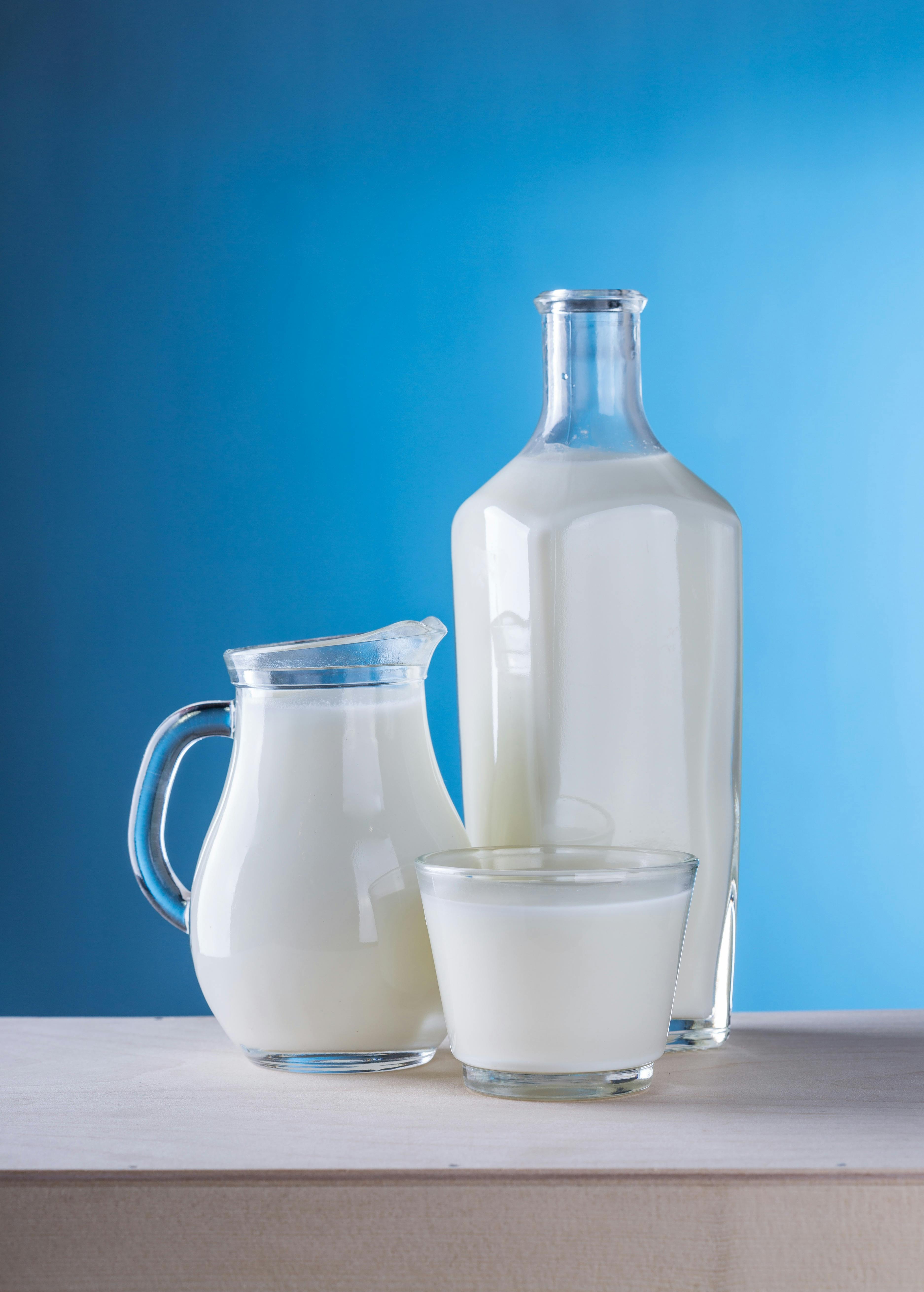
Students will conduct investigations with milk, food coloring, and soap to observe how mixing substances can cause changes, and then analyze whether these changes result in new substances. Through repeated experimentation and careful observation, they will apply their understanding of physical and chemical changes.
Essential Question
How can we investigate if mixing different substances together creates something truly new, or just a different kind of mix?
Grade(s):
- 5
Subject(s):
Recommended Technology:
Other Instructional Materials or Notes:
Materials
- Shallow plastic plate or pie pan (at least 2 per group for comparative testing)
- Whole milk (enough for multiple trials)
- 2% or skim milk (for differentiation/comparison)
- Food coloring (various colors)
- Liquid dish soap (small cup/bottle per group)
- Cotton swabs (multiple per group)
- Measuring cups (1/4 cup, 1/2 cup)
- Stopwatch or timer
- Science notebooks/recording sheets
- Pencils/colored pencils
- Access to safety goggles (optional for this specific experiment due to low hazard, but good practice for any science lab)
- Optional: Whiteboards or large paper for design planning
Lesson Progression
Day 1: Unpacking the Mystery & Initial Investigations
Objective: Students will understand the difference between physical and chemical changes and conduct initial observations of the Magic Milk experiment.
(1) Engage (20 minutes): Introduction to Changes
- Warm-up: Display images of various changes (e.g., ice melting, burning wood, mixing sugar in water, baking a cake, breaking glass). Ask: "What happened in each picture? Did something new get made, or did it just look different?"
- Vocabulary Introduction: Introduce and define "physical change" (changes form, but no new substance, e.g., ice melting) and "chemical change" (new substance is formed, e.g., burning wood). Use simple examples.
- Essential Question: Introduce the Essential Question: "How can we investigate if mixing different substances together creates something truly new, or just a different kind of mix?" Explain this is our guiding question for the project.
(2) Explore (30 minutes): Guided Magic Milk Exploration
- Materials Introduction: Show all materials. Discuss safety (no eating, no touching eyes, clean up spills).
- Teacher Demonstration (Guided Inquiry): Perform a slow, guided demonstration of the Magic Milk experiment step-by-step, prompting student observations.
- "What do you notice about the food coloring on the milk? Is it moving?"
- "What do you think will happen when I add the soap?"
- "What did you observe when the soap touched the milk?"
- Initial Group Investigation: Distribute materials to student groups. Have each group perform the standard Magic Milk experiment once, focusing on careful observation.
- Record Observations: Students sketch and write initial observations in their science notebooks. "What did you see happen?" "Did anything new appear?"
(3) Explain (20 minutes): Discussing Observations & Hypotheses
- Class Share Out: Facilitate a discussion. "What did everyone observe?" List student observations on the board.
- Connecting to Changes: "Based on what we saw, do you think adding the soap made a new substance (a chemical change) or just changed how the milk looked and moved (a physical change)?" Encourage initial hypotheses and reasoning.
- Introducing the Performance Task: Explain the "Mixing Matters" Science Report & Presentation – their goal is to gather evidence to answer our Essential Question.
(4) Elaborate (10 minutes): Designing for Investigation
- Planning for Day 2: "If we want to figure out if new substances are made, what else could we try? How could we make sure we really see what's happening?" (Guide towards changing variables like milk type, amount of soap, etc., to see if the "magic" changes.)
- Homework: Students brainstorm different "tests" or variations they could try tomorrow with their milk and soap to gather more evidence.
Day 2: Deeper Investigations & Data Collection
Objective: Students will conduct comparative investigations, collect data, and begin analyzing whether a new substance is formed.
(1) Engage (10 minutes): Review & Refine Plans
- Share Hypotheses: Students share their brainstormed variations from homework.
- Group Design: Each group finalizes 1-2 specific variations they want to test (e.g., skim milk vs. whole milk, more soap vs. less soap, putting soap on the plate vs. the cotton swab). Emphasize controlling other variables.
(2) Explore (45 minutes): Comparative Investigations
- Conducting Trials: Groups conduct their chosen variations. They should set up side-by-side comparisons (e.g., one plate with whole milk, one with skim milk, both with the same amount of soap).
- Systematic Observation & Data Collection: Students record detailed observations for each trial in their science notebooks. Encourage them to note:
- What materials were used for this specific trial.
- What happened immediately.
- What happened over time.
- Any signs of new substances (gas bubbles, new smell, new solid, significant temperature change, new color not from food coloring).
- Drawing "before" and "after" sketches.
- Teacher Facilitation: Circulate, ask guiding questions ("What are you noticing different between these two? Does this remind you of making a new substance?"), and prompt detailed observations.
(3) Explain (25 minutes): Analyzing Evidence
- Group Discussion: Teams discuss their observations and data. "What did your investigations tell you about the milk, soap, and food coloring?"
- Evidence for/against New Substance: Guide them to look for evidence of chemical change indicators: "Did you see any new gas bubbles being made from the milk and soap (not just the food coloring moving)? Did the mixture feel hot or cold? Did anything solid appear that wasn't there before?"
- Initial Conclusions: Each group forms a preliminary conclusion about whether new substances were formed.
(4) Elaborate (10 minutes): Preparing for the Report
- Report Sections: Introduce the sections of the "Mixing Matters" Science Report: Introduction (what we're investigating), Materials, Procedures (what we did for each trial), Observations/Data, Conclusion (did new substances form? Why or why not?).
- Homework: Organize their science notebook observations to prepare for writing their report.
Day 3: "Mixing Matters" Science Reports & Presentations
Objective: Students will finalize their science reports and present their findings, demonstrating their understanding of physical and chemical changes.
(1) Engage (10 minutes): Report Reminders
- Review Report Requirements: Quickly review the sections of the "Mixing Matters" Science Report. Emphasize using evidence from their investigations.
(2) Explain & Elaborate (45 minutes): Report Writing & Presentation Prep
- Report Writing: Groups work to write their science reports. Provide sentence starters or templates as needed. Emphasize clear, concise language and using their recorded observations as evidence.
- Presentation Practice: As groups finish, they prepare a short presentation to share their findings. They can use their actual plates or a diagram. They should be ready to explain their conclusion and the evidence supporting it.
- Teacher Support: Provide writing support, clarify concepts, and help groups structure their arguments.
(3) Evaluate (30 minutes): Presentations & Class Discussion
- Group Presentations: Each group presents their "Mixing Matters" Science Report and conclusion to the class.
- Peer Questions: Encourage classmates to ask questions about the designs, observations, and conclusions.
- Class Discussion: Facilitate a whole-class discussion, synthesizing findings. "What did most groups conclude? What evidence led us to that conclusion? How is this different from burning wood (a chemical change)?" Reinforce that Magic Milk is primarily a physical change where soap acts on the fat, causing movement, rather than creating new chemical substances.
Teacher Notes
Differentiate: Pre-filled recording sheets: Provide more structured templates with visual cues or checkboxes for observations. Pre-selected variations: Assign specific, simpler investigations (e.g., just compare whole vs. skim milk) rather than having them design their own.
Extend: Further investigation questions: Challenge them to research the chemical structure of soap and fat, or the concept of polar/non-polar molecules. Additional variables: Encourage them to test other variables (e.g., water temperature, different types of food coloring, amount of milk).
Student Performance Task Science Report
Print one copy for each student to have them record their work and assess.
View ResourceAssessments
Use the student performance task linked in the resources tab to assess student learning outcomes.