Honoring Our Veterans: A Number Ordering Challenge
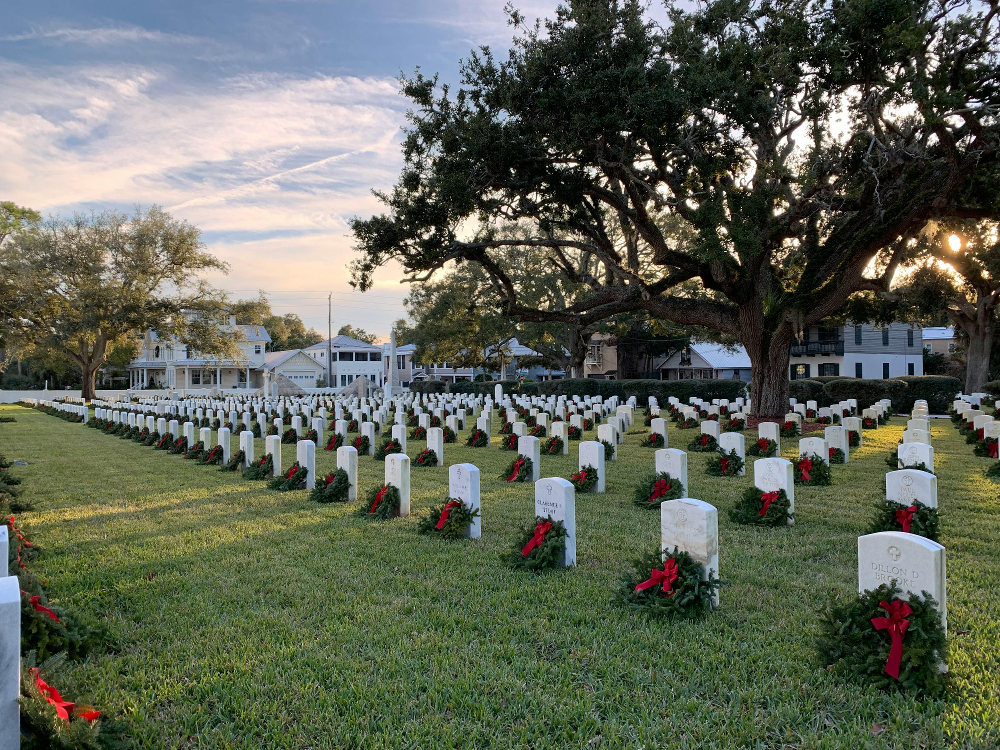
Students will use their knowledge of place value to order whole numbers up to 999,999 when given real-world contexts of Veteran's Day.
Essential Question
How can we use knowledge of place value to order whole numbers up to 999,999?
Lesson Progression
Introduction (5 minutes):
Optional: Show video in the resources tab about what Veteran's Day is.
Start with a quick review of place value.
What is place value? Place value tells us the value of a digit based on its position in a number.
Place Value Chart: Draw a place value chart on the board, including ones, tens, hundreds, thousands, ten thousands, hundred thousands.
Example: Write a large number like 834,521 on the board. Have students identify the place value of each digit (e.g., "What place is the 8 in?").
Activity 1: Comparing Numbers (15 minutes)
Start with Smaller Numbers: Begin by comparing two numbers with a different number of digits (e.g., 75 and 325).
Which number is greater? How do we know? (The number with more digits is always greater).
Numbers with the Same Number of Digits: Next, compare numbers with the same number of digits (e.g., 456 and 654).
Start by comparing the digits in the leftmost place (hundreds place). Which is greater?
If the hundreds digits are the same, move to the tens place, and so on.
Guided Practice: Provide several pairs of numbers for students to compare. Have them use the symbols > (greater than) and < (less than) to show the relationship between the numbers.
Activity 2: Ordering Sets of Numbers (15 minutes)
Introduce Ordering: Explain that ordering numbers means putting them in a sequence from least to greatest or greatest to least.
Start Small: Begin with a set of three numbers (e.g., 234, 567, 123). Guide students to order them from least to greatest.
Which number is the smallest? Which is the largest?
Increase the Difficulty: Gradually increase the number of numbers in the set and the number of digits.
Real-World Connection: Use examples that are relevant to students' lives, like the Veterans Day worksheet (linked in the resources tab) problems.
Wrap-up (5 minutes)
Review the steps for comparing and ordering numbers.
Discuss why it's important to be able to order numbers in real life (e.g., putting things in order by size, organizing data, understanding timelines).
Assessment:
Observe student participation and provide feedback during the activities.
Collect student work and assess their understanding of comparing and ordering numbers.
Assign the Veterans Day worksheet or similar problems for homework.
Teacher Notes
differentiation: Use manipulatives like base-ten blocks to represent the numbers.
extension: Challenge them to order sets of numbers with decimals or to create their own word problems involving ordering numbers.
Honoring Our Veterans: A Number Ordering Challenge
Print on out for each student to complete during the independent practice portion of the lesson.
View ResourcePBS - Veteran's Day for kids
Show this video to hook learners at the start of the lesson and provide some background knowledge on Veteran's Day.
View ResourceStandards
- 4.NR.2 Represent and compare fractions in multiple ways using part-whole relationships.
- 4.NR.2.2 Compare decimal numbers to the hundredths using the benchmarks 0, 0.5, and 1.0, concrete area, and linear models. Use the symbols for is equal to (=), is less than (<), and/or is greater than (>)
Assessments
Use the performance task linked in the resources tab to assess student learning outcomes.