First Step auf Deutsch 105: Shopping at the Department Store Lesson Plan

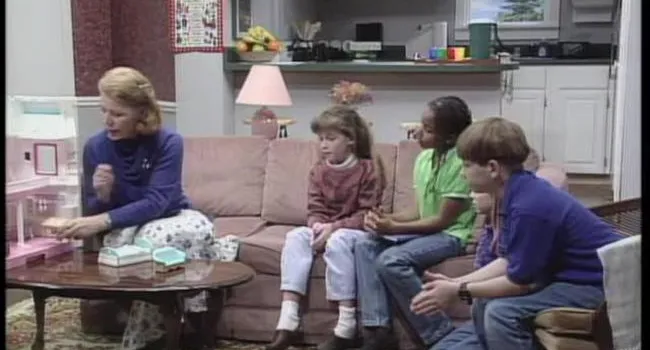
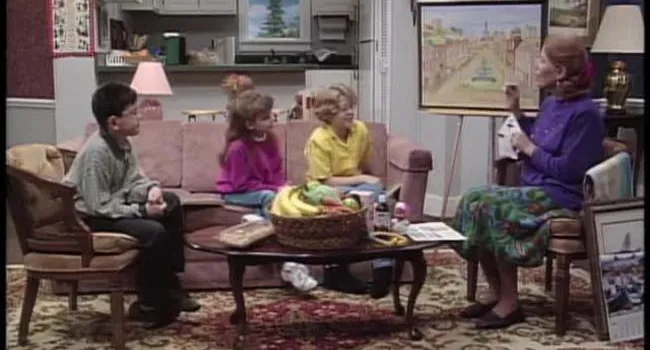
Deborah and her sister, Amber, are wearing dressy outfits because they are going to have their family pictures taken. Frau Falcone reviews the words for family members with Deborah by using a picture. They discuss the girls’ clothing and their preferences. Frau Falcone questions Robbie about whether he prefers dresses or skirts, and of course, he says neither. Then, Frau Falcone asks Jennifer about her preferences, and she says that she prefers shoes. They discuss the color of shoes. 27 Frau Falcone's girl cousin (Kusine) is visiting from Austria. Her outfit is very traditional. She has on a Dirndl dress with a white blouse, a yellow apron, black shoes, and a necklace with a black band and an Edelweiss flower. They discuss each article of clothing and its color. Frau Falcone went shopping for her daughter's birthday present. She shows them everything that she purchased, and they discuss the color and the names of the articles of clothing.
Grade(s):
- Pre K
- Kindergarten
- 1
- 2
Subject(s):
Recommended Technology:
Other Instructional Materials or Notes:
Vocabulary
| Clothing | Die Kleidung |
| pants | die Hose/die Hosen |
| shirt | das Hemd/die Hemden |
| dress | das Kleid/die Kleider |
| skirt | der Rock/die Roecke |
| hat | der Hut/die Huete |
| shorts | die Shorts |
| tie | die Krawatte/die Krawatten |
| shoe | der Schuh/die Schuhe |
| sock | der Socke/die Socken |
| sweater | der Pullover/die Pullover |
| t-shirt | das T-shirt/die T-shirts |
| jeans | die Jeans |
| pajamas | der Schlafanzug |
Lesson Progression
Before Viewing the Video Lesson
1. Review the vocabulary from lesson #4 that pertains to the body parts. Students will need these words in today's lesson. Also, review colors, numbers, and the words for man, woman, boy, and girl.
2. What are your students wearing today? Tell them that they will learn the German words for different items of clothing.
3. How many girls are wearing dresses, skirts, pants, or sweaters? How many boys are wearing pants, shirts, sweaters, jeans, or T-shirts? Is anyone wearing his or her pajamas? Is anyone wearing a hat? Calculate the number wearing these different items of clothing. On the board, make separate graphs for the boys and girls.
4. Where did your students get their clothes? Discuss shopping for clothes. In today's lesson, the students will view a clothing store. Ask them to watch for the things that they would buy if they went shopping.
Follow-up Activities
1. Use the First Step auf deutsch Again video lesson to review the emphasized vocabulary and conversations.
2. Hold up different items of clothing, and ask the students for the correct vocabulary word. You may want to use real clothes, baby clothes, and/or doll clothes. You could even use paper dolls.
3. Play a game where students decide who would use each item of clothing. Let the students decide whether a man (der Mann), woman (die Frau), boy (der Junge), or girl (das Maedchen) would use the item.
4. After the follow-up activities, let students view the video lesson again so they can respond and practice with the children on the lesson.
5. Since there are many cognates in this category (words that sound or look the same with the same meaning), list clothing words in English, and then ask the students to match those words with German words. Finally, discuss how many and which ones are the same or different. You could also use a Venn diagram.
Supplemental Activities
1. Play the game used in the lesson by putting a clothing item on a body part. Use the example in the program, and label some correctly and some incorrectly.
2. Discuss traditional costumes. Students should be familiar with other types of traditional costumes that are worn on special celebrations and certain holidays. Let them look for traditional types of dress worn in German-speaking countries. Some of the students may desire to dress the dolls, paper dolls, or paper cutouts in the traditional costumes. Discuss the clothing.
3. If possible, invite natives of different countries to visit your class. Ask them to wear and/or tell about the traditional dress in their country. Ask them to explain the significance of the style, colors, etc. of their native clothing. A local college may have an international students’ association that would be able to assist with this activity.
4. Ask the PE teacher to have races involving clothing. Have a relay game that involves packing a suitcase and pretending to go on vacation. Put three oversized items of clothing (shirt, shorts, hat) in each suitcase. Put the suitcases at the starting point (home). Runners need to pick up the suitcase, and run to the second point (vacation spot). Have them open the suitcase, put the clothes on as the word is called out in German, close the suitcase, run around the suitcase once, open the suitcase, take off the clothes (others could again call out the German words), put the clothes back into the suitcase, and return home with the suitcase. The next team member does the same process until the entire team has gone on vacation.
Remember to use the vocabulary words as much as possible in class during the next week. Review as many words as possible from the first five lessons. Whenever there is a spare moment, even while waiting in line, review vocabulary words in fun ways. Continue to add to the First Step auf deutsch suitcase folders.
Teacher Notes
Culture
American and German students dress very similarly for school. Younger children wear shorts to school, but older children do not usually wear shorts to school. Shorts are mainly worn for physical education class, camping, hiking, and while on vacation. In the cities, most people wear the same kind of clothing as Americans. During special occasions, festivals, holidays, weddings, and special parties, people often wear traditional clothing, especially in the smaller, more rural areas. Traditional clothing includes: Lederhosen (leather shorts), special Tyrolian hats, leather jackets or vests for the men, and Dirndl (dresses with aprons) for the women. The Edelweiss flower is symbolic of Austria and Switzerland, and it is often visible in modern and traditional clothing.
First Step auf Deutsch 105: Shopping at the Department Store
German vocabulary words to be used when shopping in a department store.
View Asset