First Step auf Deutsch 103: Shopping at the Grocery Store Lesson Plan

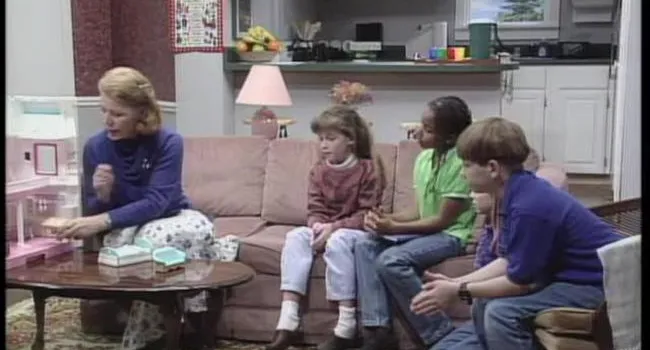
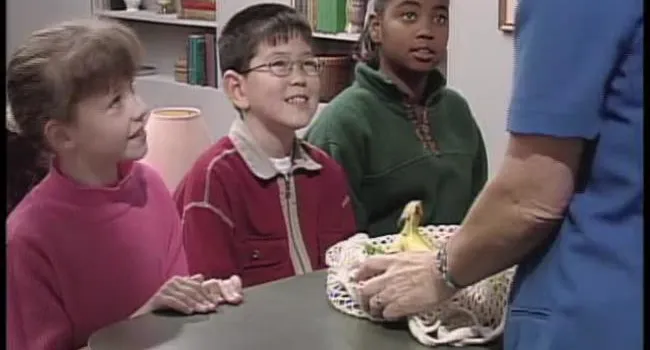
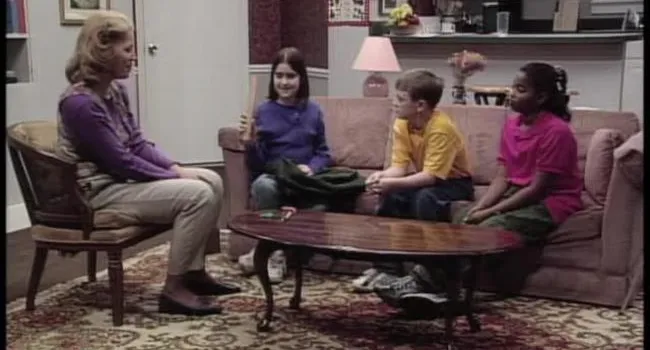
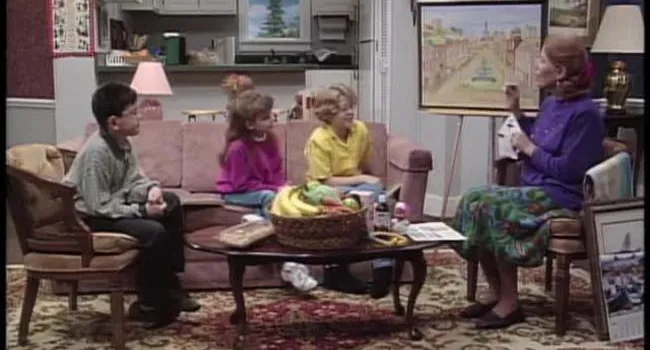
The children arrive at Frau Falcone's with a plate of cookies for her. She thanks them, and they move to the counter. As she unloads the groceries, she discusses the food that she bought. She does an activity that teaches them the different names of food and their colors. She introduces bananas, apples, oranges, and grapes. They talk about which ones need to be washed and which ones do not. They also discuss the colors and count them. Sean says that he is hungry and would like to have ten apples. They count out 10 apples and discuss the different colors of fruit again. Then, the children learn various types of food and drink, and Frau Falcone offers the children lunch.
Grade(s):
- Pre K
- Kindergarten
- 1
- 2
Subject(s):
Recommended Technology:
Other Instructional Materials or Notes:
Vocabulary
| The Colors | Die Farben |
| green | gruen |
| red | rot |
| yellow | gelb |
| orange | orange |
| purple | lila |
| Fruit | das Obst |
| apple | der Apfel |
| orange | die Orange |
| banana | die Banane |
| grapes | die Weintrauben |
| Vegetables | das Gemuese |
| cabbage | der Kohl |
| carrots | die Karotten |
| tomatoes | die Tomaten |
| potatoes | die Kartoffeln |
| Meats | der Fleisch |
| sausage | die Wurst |
| bratwurst | die Bratwurst |
| Food & Drink | das Essen und die Trinken |
| milk | die Milch |
| coffee | der Kaffee |
| juice | der Saft |
| jelly | die Marmelade |
| butter | die Butter |
| bread | das Brot |
| hard rolls | das Broetchen |
| cookies | die Kekse |
Lesson Progression
Before Viewing the Video Lesson
1. Review the previous vocabulary. Focus on the number words since items at the grocery store will be counted.
2. Tell the students that they will learn some more colors. Review the other colors learned in the last lesson. What other colors do the students think will be included?
3. If the students went to the grocery store on the way home from school, what would they see? In this lesson, the students will learn the names of some fruits and vegetables.
Follow-up Activities
1. Use the First Step auf deutsch Again video lesson to review the emphasized vocabulary.
2. Review the color words from this lesson and the previous one. Use the same color circles that were used in the lesson to name the colors. Add labels to things in the room that demonstrate these colors.
3. Review the names of fruits and vegetables. Use color circles to determine the color of these fruits and vegetables. Using the week’s lunch menu, replace the names of any English words for fruits and vegetables with the German words.
4. Discuss the foods seen on the video. Compare and contrast German meals and meal times with American meals and meal times. Notice how the utensils are held differently from the way Americans hold them. The students could practice by putting a fork in the left hand and a knife in the right. When using a fork, the left wrist is turned so that the fork enters the mouth “upside down”, and the utensils remain in the same hand while the food is cut and eaten. An easy, “authentic” German snack, such as dark pumpernickel bread with “Nutella,” a German chocolate spread, could be enjoyed in the classroom. These items are available in American supermarkets. A German drink known as “Spezi,” can also be enjoyed. Mixing an equal amount of Coke with Sprite makes this beverage, and it should be served without ice.
Supplemental Activities
1. Play a float and no-float game with the students. Have them predict which fruits -- orange, apple, grape, and banana -- will float or not. You can vary the color of apples and grapes in order to review vocabulary.
2. A Gouin series is an activity used by foreign language teachers in which all the steps in an activity are given in order. Frau Falcone did this when she made orange juice. Let students do some in English since they do not know all of the words necessary to do it in German. Review the section of the video where Frau Falcone motioned for a drink, took an orange, sliced the orange, squeezed the orange, poured the juice into a glass, and drank it.
3. Using the Gouin series, ask the children to make a sandwich. Discuss the difference between American (closed-faced) and European (open-faced) sandwiches. You will need bread (preferably wheat or dark bread), butter, cheese, meat, and/or vegetable slices.
4. German food, such as "Knockwurst” or “Bratwurst," Sauerkraut, red cabbage, cheese (Munster or Swiss), dark breads (Farmers Bread or Pumpernickel), and pretzels, can be found in supermarkets throughout the United States. In Germany, pretzels are soft and big. In the US, pretzels are small, crunchy, and hard. However, feel free to use the American ones.
Remember to use the vocabulary words as much as possible in class during the next week. This should be easy since these words are associated with food and colors. Add to the First Step auf deutsch suitcase folders.
Teacher Notes
Culture
In this lesson, Frau Falcone shares native German meals with the students. As you will notice,
in Germany, they are three main meals: breakfast, lunch, and dinner. In addition, many
Germans also have a snack or a break in the morning between lunch and a coffee break
(Kaffeepause) with coffee and cakes in the afternoon. Germans really enjoy their meals, and
their food is very fresh and plentiful.
Breakfast is the first meal of the day. On busy school/work days, there is not much time to
linger and enjoy the meal. However, on the weekends, families often enjoy a leisurely meal
inside or on the patio. Breakfast usually consists of a soft-boiled egg, toast, and other breads or Broetchen (little bread rolls), butter, muesli, marmalade, and chocolate spread (like chocolate peanut butter) for the children. Bread is very important to Germans, and they serve various types at mealtimes.
In Germany, lunch is comparable to an American evening meal. This meal is usually served hot and may consist of meats and vegetables. Children are not served lunch at school, so they usually go home or to a restaurant (with their parents) for lunch. At work, people have at least an hour for lunch. Many companies have a canteen or even a small restaurant on the premises for their employees.
The evening meal, or evening bread (Abendbrot), is equivalent to an American lunch. It consists of cheese, cold cuts, and various types of bread. Sometimes lunch consists of soup, salad, and/or fresh vegetables. Germans usually put butter or mustard on their bread, and they place meat, cheese, and/or vegetables on top of the bread. Their sandwiches are much like an openfaced sandwich. As you will notice in the video, mayonnaise is also used, but it is not as common as in America.
Another noticeable difference is that Frau Falcone uses a net or canvas bag at the grocery store instead of paper or plastic bags. This is very typical in Europe, and it is considered a conservation technique. Europeans are much more conservative with their resources than Americans, and they recycle extensively. They often bring their own bags or baskets for shopping. They have to purchase any additional plastic bags if they need them. Unlike Americans, they bag their own groceries.
First Step auf Deutsch 103: Shopping at the Grocery Store
Learn to use German to speak about the foods you eat.
View Asset